


Product Overview
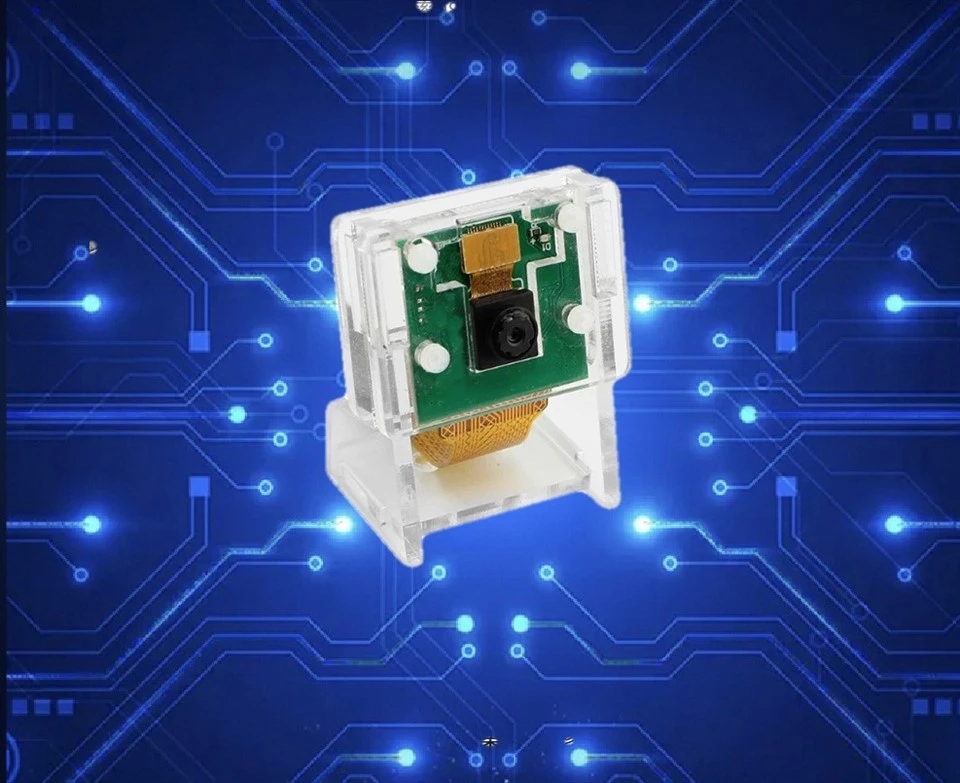
MIPI Camera Modules are engineered for direct integration with embedded systems and single-board computers via the MIPI CSI-2 interface. Combining CMOS image sensors, precision optical components, and robust interface circuitry, these modules deliver reliable image acquisition for embedded vision and industrial automation applications.
Available configurations include both rolling shutter and global shutter options across diverse resolutions, pixel sizes, frame rates, and optical setups to match exact performance targets.


Technical Specifications & Hardware Configuration
Sensor Specifications
The following configurations represent standard baseline specifications. Final model availability and parameter pairings should be verified against the official product datasheet.
|
Parameter |
Standard Model (Rolling Shutter) |
High-Resolution Model (Rolling Shutter) |
Industrial Model (Global Shutter) |
|
Sensor Resolution |
12.0 Megapixels |
12.3 Megapixels |
1.0 Megapixel (Mono) |
|
Sensor Format |
1/2.43 inch |
1/2.3 inch |
1/4 inch |
|
Pixel Size |
1.4 um x 1.4 um |
1.55 um x 1.55 um |
3.0 um x 3.0 um |
|
Shutter Type |
Rolling Shutter with HDR |
Rolling Shutter |
Global Shutter |
|
Max Frame Rate |
46 fps at 1080p |
60 fps at 1080p / 40 fps at 4K |
120 fps at 720p |
|
Interface |
MIPI CSI-2 (2-lane / 4-lane) |
MIPI CSI-2 (2-lane) |
MIPI CSI-2 (2-lane) |
|
Operating Temperature |
-20°C to +70°C |
-20°C to +70°C |
-30°C to +75°C |
PCB & Electrical Architecture
Substrate Material: 4-layer FR4 printed circuit board with 1 oz copper weight.
Signal Integrity: Dedicated analog and digital ground-plane isolation to minimize circuit noise and electromagnetic interference (EMI).
Power & Interface: Optimized power delivery networks tailored to specific sensor voltage rails and host CSI-2 physical layer requirements.
Optical Configuration & Lens Mounts
M12 Lens Holder: Metal lens holders equipped with locking set-screws for secure mechanical installation and focus positioning.
CS / C-Mount Options: Alloy mounting rings designed for compatible optical lenses and custom back focal length (BFL) adjustments.
Optical Filtering Options:
Standard IR-Cut Filter: 650 nm cut filter optimized for accurate daylight color reproduction.
NIR Bandpass Filters: Optional 850 nm or 940 nm filters for near-infrared machine vision.
NoIR Configuration: Clear protective cover glass for specialized NIR transmission.
Interconnection & Cabling
Cabling Types: Configurable with flexible printed circuit (FPC) ribbon cables or shielded micro-coaxial interconnects.
Key Considerations: Connector type, pinout arrangement, cable length, and signal transmission integrity.
Dynamic Endurance: For applications involving repeated mechanical movement, cable construction and bending-cycle ratings must be matched to operational conditions.
Rolling Shutter vs. Global Shutter
Rolling Shutter: Ideal for static or low-speed imaging scenarios where sequential sensor readout aligns with motion conditions.
Global Shutter: Captures entire image frames simultaneously, eliminating motion artifacts and spatial distortion in high-speed dynamic environments.
Resolution & Frame Rate Planning
Resolution and frame rate should be balanced against target image detail, movement speed, host processing capacity, and available MIPI CSI-2 bandwidth. High-resolution configurations demand adequate SoC processing resources and multi-lane bandwidth allocation.
Host Platform Compatibility
Prior to module selection, verify the following hardware and software parameters with your engineering team:
Embedded processor or SoC model
MIPI CSI-2 lane count and maximum data rate support
Connector type and pin assignment
Linux kernel support, V4L2 integration, and libcamera compatibility
ISP (Image Signal Processor) and device tree configuration requirements
Environmental & Optical Matching
Match the optical lens parameters (focal length, field of view, working distance) and operating temperature ranges to the installation environment. For near-infrared projects, filter transmission curves must align precisely with active illumination wavelengths.
Typical Applications
Automated Optical Inspection (AOI)
High-speed capture on industrial production lines for surface flaw detection and precision dimensional measurement.
01
Autonomous Mobile Robots (AMR)
Global shutter configurations deployed for real-time visual navigation, obstacle detection, and localization (SLAM).
02
Medical & Laboratory Equipment
Compact camera subsystems integrated into portable point-of-care diagnostic devices and digital microscopy tools.
03
Smart Access Control & LPR
High-resolution modules utilized in outdoor biometric terminals and automated license plate recognition systems.
04
Manufacturing & Quality Control
SMT Assembly & Integration
Component placement is executed on high-precision surface-mount technology lines. PCB layer configurations, copper thickness, and connector placement strictly adhere to validated engineering specifications.
Optical Assembly & Alignment
Lens holders, optical filters, and sensors are assembled within controlled environments. Active optical alignment procedures are utilized where required to ensure precise lens-to-sensor centering and optimal focus performance.
Inspection & Testing Protocol
Automated Optical Inspection (AOI): Solder joint integrity and component placement verification.
Electrical Testing: Continuity checks and power rail stability validation.
Functional & Optical Testing: Verification of image output, MTF performance, optical distortion mapping, and dead-pixel threshold screening prior to packaging.
Material Compliance & Traceability
Manufacturing operations maintain full material identification and production records, ensuring complete RoHS and REACH compliance documentation upon request.
Customization & OEM/ODM Support
We support flexible customization tailored to specific OEM product requirements:
Sensor Selection
Alternative CMOS sensors based on resolution and shutter architecture.
Mechanical Footprint
Custom PCB dimensions, mounting hole layouts, and enclosure compatibility.
Optical & Cable Adaptation
Tailored M12/CS mounts, custom filter specifications, and specialized FPC/micro-coaxial cable lengths.
We are one of the most experienced raspberry pi camera module manufacturers and suppliers in China, also support custom service. We warmly welcome you to wholesale durable raspberry pi camera module at competitive price from our factory. If you have any enquiry about cooperation, please feel free to email us.